Your Ultimate Wedding Planning Checklist: Every Step from Engagement to Wedding Day


Still on an engagement high? Planning your wedding is undoubtedly one of the most exciting and thrilling times of your life. You’ll get to choose from so many different things that all come together to form the perfect day for you, your partner, friends and family. But with so many things to consider, book and pay for, how do you organise wedding planning? With our indispensable wedding planning checklist, of course!
Thanks to our comprehensive guide of what to do when planning a wedding, your ‘I to-Do’ list just got a lot more manageable. We’ve covered everything from when to lock down your wedding venue and post your invites to the month you need to draw up your seating plan. And let’s not overlook the outfit shopping (only the most important stage of the planning, right?).
Ahead, our wedding checklist for UK celebrations has everything covered so you can keep stress levels to a minimum and not worry about anything you might have forgotten. That leaves you to get on with the most important thing – have the wedding of your dreams and marry the love of your life.
12+ Months Before the Wedding
- Work out your budget
- Decide on guest numbers
- Visit and book your venue(s)
- Fix a date with your registrar or celebrant
- Consider hiring a wedding planner
- Purchase wedding insurance
Work out your budget
Sit down and have the money conversation with your partner and both sets of parents (if applicable) to decide on your budget and who will pay for what. Sure, it’s not the most glamorous of wedding planning tasks but having a clear idea of your budget is essential to ensure a smooth-running wedding plan.
Decide on guest numbers
Draw up a rough guest list so you know how many people you’ll need to accommodate and therefore what kind of venues you need to be visiting.
Visit and book your venue(s)
Do this as soon as possible. Some of the most popular wedding venues can get booked up to two years’ in advance. Aim to book the venues for both your ceremony and reception (if they’re different) at the same time if you can. When thinking about your ceremony venue, you’ll of course likely be influenced by the type of service you want – civil, religious or humanist.
Fix a date with your registrar or celebrant
If you’re planning a civil ceremony, it’s essential to book your registrar to ensure your ceremony is legally binding. Book one that is local to your venue, not necessarily local to where you live.
Celebrant-led ceremonies are currently only legally binding in Scotland, Northern Ireland and the Channel Islands, but many couples still choose to have a celebrant-led ceremony here in the UK.
Remember, if you’re having a religious wedding, such as a Church of England ceremony, your ceremony will be legally binding, and you don’t need a registrar.
Consider hiring a wedding planner
If you’re thinking about hiring someone to take on some of the more admin-heavy tasks, now is the time to book!
Purchase wedding insurance
If there’s one thing we’ve learned over the years, it’s to expect the unexpected. Wedding insurance will protect you against things that happen outside of your control. You might even want to consider getting insurance for your engagement ring, too.
9-12 Months Before the Wedding
- Send out save the dates
- Book your photographer (and videographer)
- Book your caterer
- Lock in key entertainment
- Start dress shopping
- Pick your wedding party members
- Set up a wedding website
- Organise guest accommodation
Send out save the dates
This is especially important if you have guests travelling long distances to allow them to make the necessary travel and accommodation arrangements ahead of time.
Book your photographer
… and your videographer if you’re having one. With such a wide variety of photography and film styles out there – from traditional and reportage to editorial and high-fashion – finding a photographer who fits your style, and the style of your wedding, is important.
Book your caterer
It may be that your wedding venue is taking care of the food and drink in-house but if not, you’ll need to book an outside catering company. Remember that some venues require you to book their preferred suppliers, so get this settled early on.
Lock in key entertainment
Whether it’s a live band, a DJ, a string quartet for the ceremony… if you’re having anything other than a Spotify playlist on loop, your entertainment is one to think about now.
Start dress shopping
Make appointments to try on wedding dresses and outfits. Many designers and boutiques have waiting lists for Saturdays and may even charge a booking or cancellation fee (often redeemable against a purchase). Why not book a weekday when it’ll likely be quieter?
Pick your wedding party members
Undoubtedly one of the fun parts of the planning, decide who you’d like to be in your wedding party and enjoy dreaming up some fun ways to ask them!
Set up a wedding website
These can provide guests with information, such as local hotels and directions, plus you can use them for things like RSVP management and photo galleries.
Organise guest accommodation
If your venue has space for some guests to stay over, decide who that might be and speak to your wedding coordinator about blocking out some rooms. Otherwise, compile a list of nearby accommodation and transport options for those guests who are coming from far away.
6-9 Months Before the Wedding

- Give notice
- Decide on your wedding dress
- Book your florist
- Create a gift list
- Book your transport
- Order your wedding cake
- Consider wedding favours
- Shop for wedding party outfits
- Order your invitations and on-the-day stationery
Give notice
To ‘give notice of marriage’ is a legal requirement that formalises your intentions and prepares your marriage licence. Regardless of where you’re tying the knot, you’ll need to go to your local register office with various forms of ID and all the details of where you’ll be marrying. This needs to be done at least 28 days ahead of the wedding – but now is a good time to tick this one off your wedding planning checklist.
If you’re having a Church of England ceremony, you’ll be required to attend a reading of the banns on a Sunday service instead, often closer to the date of your big day.
Decide on your wedding dress
Remember, you’ll need to allow at least four months for a made-to-measure gown to be delivered. Your first fitting will be around two months before the wedding date.
Book your florist
Discuss bouquets, buttonholes and the arrangements you’d like for the ceremony and reception. Go armed with a list of what it is you need if you can so you can both speak openly about costs.
Create a gift list
A really fun part of the wedding planning and one you can enjoy doing together of an evening. The trick is to include a variety of price ranges so that guests can all find something suitable.
Book your transport
This includes transport to your wedding venue and on to your reception if it’s somewhere different. Consider how your wedding party and guests will travel, too.
Order your wedding cake
Particularly important if you want something more than a simple iced sponge! Wedding cake makers can get booked up months in advance – confirm details such as whether it will be delivered to your venue or required to be collected.
Consider wedding favours
If you’re having them, of course. If you’re going down the DIY route, you will want to start making them now to give yourself plenty of time.
Shop for wedding party outfits
With your outfit secured, it’s time to start thinking about everyone else! Don’t leave it too late, particularly if you have a large group and want them to wear the same or similar styles.
Order your invitations and on-the-day stationery
Get any bespoke designs ordered as early as possible!
3-6 Months Before the Wedding
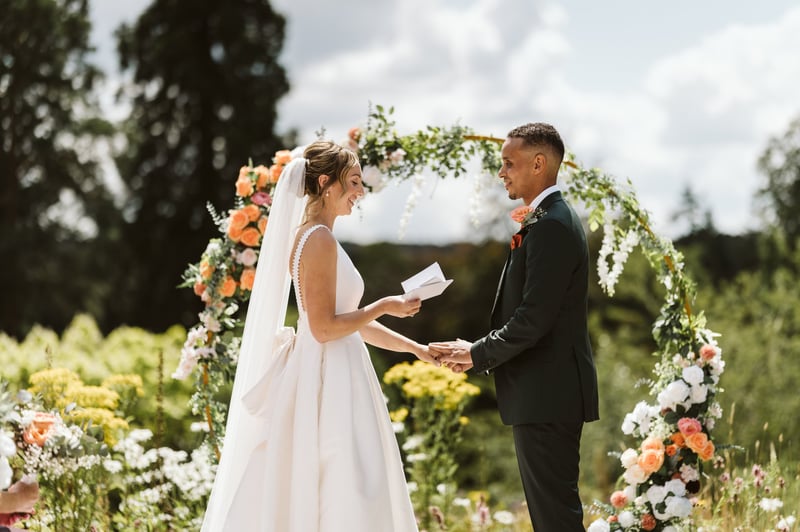
- Start suit shopping
- Book your honeymoon
- Book your first-night hotel
- Confirm your menu
- Send out your invitations
- Buy your wedding rings
- Shop for outfit accessories
- Book consultations for hair and make-up
Start suit shopping
With your wedding colours established, it’s time to hit the shops with any dads, ushers, best men or anyone else who will be wearing a suit as part of the wedding party. Remember that bespoke suits can take up to six months to create, so if you’re going down that route consider this a gentle prod!
Book your honeymoon
It’s also the time to check the expiry and renew your passport if needed. Find out if you need visas or inoculations for travel to your destination, and don’t forget to book flights in the names that match your passport.
Book your first-night hotel
Make sure the hotel knows it’s your wedding night! Ask if they offer any special gifts for newlyweds, if not, arrange with the concierge to deck your room out with champagne and flowers – because why not?
Confirm your menu
This includes any canapés and drinks orders with your venue or caterer. Some venues and catering companies will offer menu tastings (though there can be a charge for these). Be sure to keep them updated with any potential dietary needs or allergies too. You might not have a finalised guest list yet, but always ask how they plan on catering to these if needed.
Send out your invitations
And start to keep an up-to-date list of acceptances and refusals.
Buy your wedding rings
Set a firm budget and remember to allow around three months for delivery if you are ordering wedding bands that are bespoke or engraved.
Shop outfit accessories
This includes shoes, lingerie, hair accessories and jewellery alongside bags, socks and ties. You’ll want all your accessories before your final fittings to see the full look.
Book consultations for hair and make-up
Discuss potential looks with your hair stylist, taking into consideration that you might need extra time if you want to grow your hair, and try out various looks with your make-up artist. Many hair stylists and make-up artists will charge for consultations – always check so you can budget for these.
1-3 Months Before the Wedding
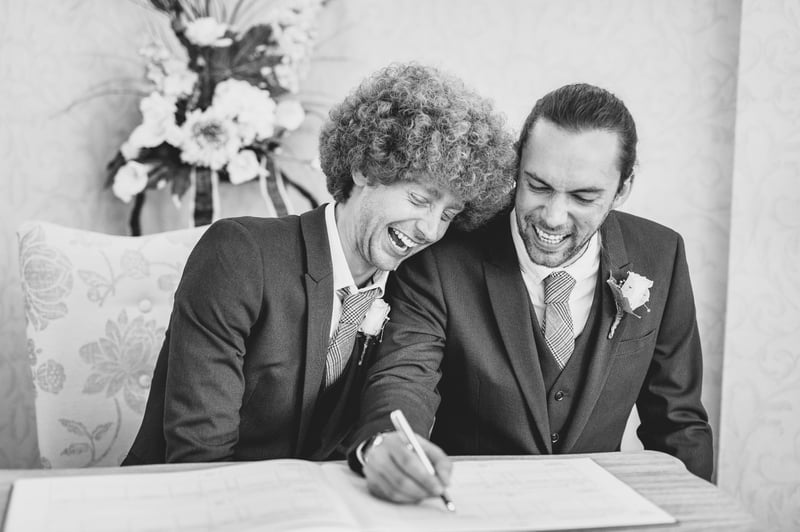
- Have final fittings and try on your whole outfit
- Confirm your ceremony music and readings
- Confirm your order of service
- Attend your hen and stag nights
- Write your wedding vows and speeches
- Book in any beauty treatments
- Choose gifts for your attendants and helpers
- Finalise any last-minute décor details
- Chase any outstanding RSVPs
- Draw up your seating plan
- Meet with your planner or in-house coordinator
Have final fittings and try on your whole outfit
Missing anything? Buy it now! And don’t forget to start breaking in those shoes…
Confirm your ceremony music and readings
If you’re marrying in a church, discuss readings with the minister or vicar and music with the organist or ceremony musicians. For those having a civil ceremony, your readings and music choices will also have to be reviewed by the registrar to ensure there are no religious connotations so get these in ahead of time.
Confirm your order of service with your vicar or registrar
This is especially important if you’re having booklets or order-of-service cards printed.
Attend your hen and stag nights
This is (hopefully) the one area of your wedding where you haven’t had to tackle the planning! A month before the big day is a good time to splurge on a fun-filled weekend – not least so you have time to fully recover before the wedding itself.
Write your wedding vows and speeches
And encourage your best man or other wedding party members who are speaking to do the same!
Book in any beauty treatments
This includes any hair trim or colour appointments, brow shaping, facials, perfume shopping or spray tans.
Choose gifts for your attendants and helpers
Think thoughtfully and creatively if you can – who really needs another engraved hip flask? If means allow, consider something like tickets to a sporting event or a chic piece of jewellery.
Finalise any last-minute décor details
We’re talking wedding guest books, letterboxes, and any additional signage that you might need for your venue. Now is also a good time to name your tables if you plan to do so.
Chase any outstanding RSVPs
It’ll soon be time to confirm guest numbers with your venue and caterers…
Draw up your seating plan
Once all the RSVPs are in, begin drawing up your table plan, though this is best left to the last minute in case of any cancellations. Once it’s ready, send on to your wedding planner or venue (with details of any dietary requirements).
Meet with your planner or in-house coordinator
With the wedding a matter of weeks away, meeting with the venue team can help steady any nerves and reassure you that everything is in hand and will go smoothly on the day.
Final Week Before the Wedding
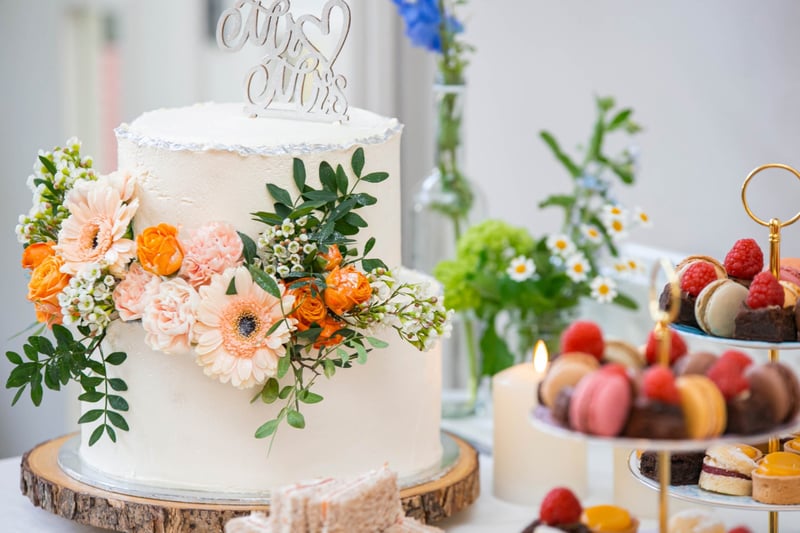
- Make any final payments
- Pack for your honeymoon
- Practice reciting your vows
- Get a mani/pedi (or a massage)
- Collect any items you may be hiring
- Share the itinerary with your wedding party
- Get an early night
Make any final payments
Each vendor will have different payment terms and for some suppliers, final payments are required a month before the wedding. However, any outstanding payments should be paid in full this week.
Pack for your honeymoon
And don’t forget to organise transport to take you from your venue or first-night hotel to the airport, if required.
Practice your reciting your vows
You know the saying… it makes perfect!
Get a mani/pedi
Or a massage! Anything else that requires you to feel your best in time for the big day.
Collect any items you may be hiring
It can be helpful to allocate this job to a member of the wedding party, if you can. See also: taking key items to the venue, if applicable.
Share the itinerary with your wedding party
They all have a role to play, so it’s important they understand the order of the day’s events as well as you do. Go through who is responsible for what, and who will be speaking when, so everyone is clear on the running order.
Get an early night!
With so much excitement and nerves, the idea of sleeping the night before your wedding will feel like a challenge, but getting an early night will ensure you’re as fresh-faced as possible for the big day.
And that’s it! Then it will be time to get ready for your wedding and have the most incredible celebration of your life. The best laid plans will have ensured a day filled with love and incredible memories, so remember to soak up as much as you can and enjoy it.
Wedding Planning Checklist UK: FAQ

How far in advance should you start planning a wedding?
Ideally, you should start planning your wedding as soon as possible but in reality, it all comes down to how far into the future you’d like your wedding to be.
If you’re not looking to get married on a specific date or you’re not in any kind of rush to tie the knot, you might not need to dive into the deep end straight away.
On the other hand, if you want to get married within a year, then you definitely need to start making decisions and securing your favourite vendors with deposits. Some popular wedding venues and suppliers will get booked up to two years in advance, particularly during peak wedding season and on weekends.
What is the first thing to do when planning a wedding?
The first thing you should do when planning a wedding is decide on your budget. Sit down together, with both sets of parents (if they plan on contributing) and work out how much you can afford to spend and what your wedding is likely to cost. Write your estimated costs in a spreadsheet or budget planner to help you.
From then, you can work out things such as guest numbers, which venues you can afford and which elements of the day to prioritise.
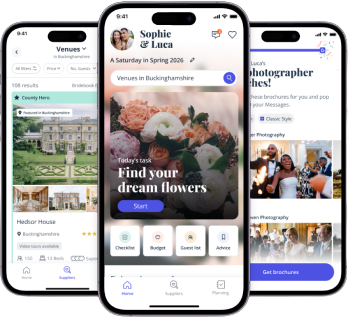
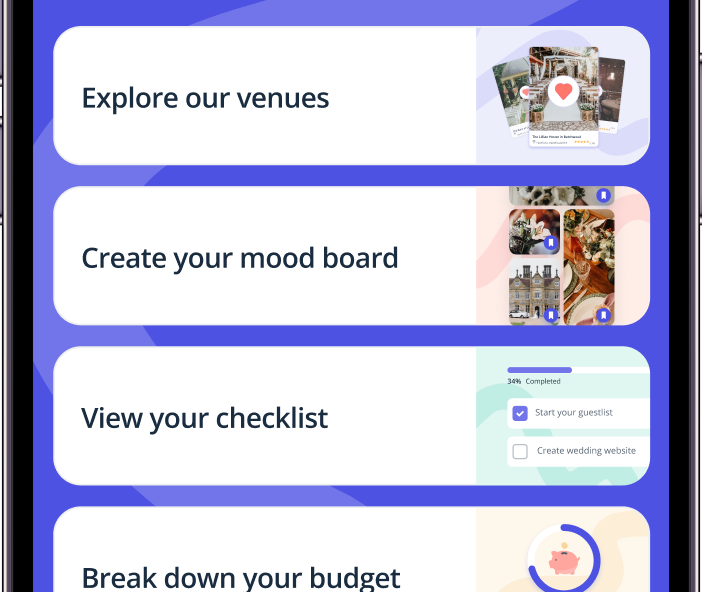
To help you, use Bridebook’s comprehensive and easy-to-use wedding checklist tool to organise your month-by-month to-dos straight from your mobile.
What should I book first for a wedding?
Your priority booking should be your wedding venue. According to our report on the average cost of a wedding, this will also be your biggest wedding-day expense.
Aim to book your ceremony and reception venue together (if they’re not all in one place) and follow that up with your caterer (if it’s not being taken care of in-house) and wedding photographer, both of which will also be two of the biggest chunks of your wedding budget.
Other key vendors can be booked further down the line.
What should be on a wedding planning checklist?
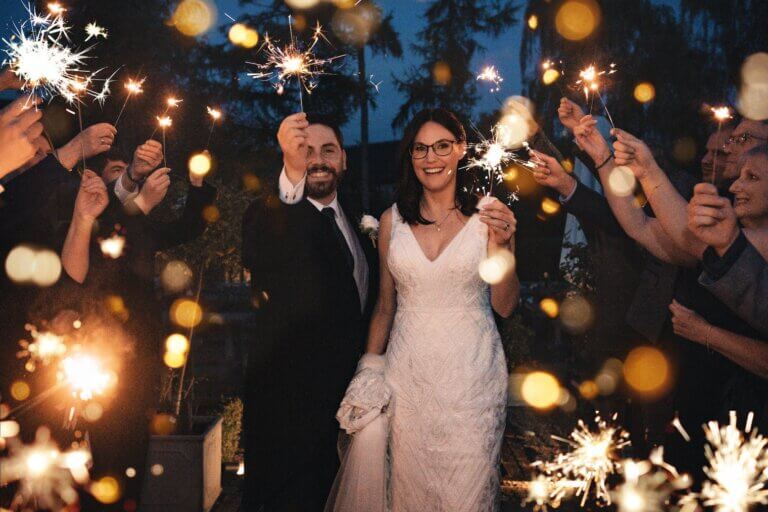
Our ultimate wedding planning checklist for UK weddings above tells you everything you need to know about what should be on your wedding to do list, but not every element listed will apply to you.
Start by reviewing the full list and working out which parts of the planning are relevant to your own wedding day timeline, then customise it to create your own.
And if it all becomes too much? Have heavy and light weeks if you can. Alternate everything that you have to do, so you have a ‘fun’ detail one week and then something more involved or admin-heavy, such as the table plan or finding a photographer, the next.
The easiest way to keep your planning on track? The free Bridebook Wedding Checklist – a fast, easy and comprehensive tool that allows you to tick off things as you complete them. Download on the app and take it with you wherever you go.
You Might Also Like…
- The Ultimate Wedding Ceremony Guide
- The Ultimate Wedding Ceremony Order
- The Best Wedding Day Timeline
- How Long is a Wedding Ceremony?
Happy Planning!
Related articles