Wedding Day Timeline & Order of the Day: A Complete Schedule Example

Other than your partner and guests, a wedding day timeline – or order of the day – is pretty much the most crucial part of your celebration.
A clear wedding day schedule ensures that everyone, from guests to vendors to the wedding parties, knows where they need to be, what time they need to be there and what’s going to happen once they’re there, meaning the day will run like clockwork.
To help you plan your wedding day timeline, Bridebook, the UK’s #1 wedding planning platform used by over 2.8 million couples, has pulled together a guide to what the best wedding day timeline might look like, including the order in which everything happens throughout a typical wedding day, how long each part usually takes and the most popular time couples choose to hold their ceremony.
If you’re after the month-by-month plan rather than the on-the-day schedule, our wedding planning timeline covers everything from engagement to the final week.
Buckle up, you’re about to learn a lot…
What Is the Order of the Day at a Wedding?
The order of the day at a wedding is a clear timeline – often an hour-by-hour timeline – of all the things set to happen on your big day.
It covers everything from your morning preparations to when the evening food will be wheeled out, and is a helpful way to guide both your vendors and your guests through the event.
Discover the order that most UK weddings follow below…
Typical Order of a Wedding Day
Depending on the type of wedding you have, be it a registry office ceremony, a religious ceremony or a wedding ceremony totally unique to you, wedding timelines can have a few key differences. Before we dive into the various wedding timeline examples, it’s helpful to know the schedule of a typical wedding day, which tends to run in the following order – times, of course, vary depending on the couple.
- Getting ready
- Ceremony
- Drinks reception
- Wedding breakfast
- Speeches
- Evening reception
Now you know the basic framework for a wedding day timeline, you can embellish it with elements you know you want to have within each section – for example, when you want to take photos (normally during the drinks reception), when you want to cut the cake and at which stage you might take a quiet moment for yourself and your spouse to take a breath and soak it all in.
To guide you when creating your wedding timeline, it’s helpful to know how long various parts of your wedding day will take. Use the times below as an approximation when planning your big day schedule
Getting ready (including hair, makeup and getting dressed) – Approximately two hours. This may take longer if the artist you’ve hired is also doing hair and makeup for your wedding party.
Pre-wedding photos (wedding party) – 30 to 45 minutes.
Ceremony – 45 to 60 minutes, but this can vary depending on whether it’s a religious ceremony or you have specific personal preferences. Registry office weddings can be as short and sweet as 10 minutes.
Photographs – Around one hour, but it can vary depending on the size of your wedding party and whether you have to travel to a specific location to take photos.
Reception drinks – Approximately an hour, which may start while you and your new spouse are having photos taken. It gives time for everyone to have a drink and unwind before the wedding breakfast. You might want to add 10 or 15 minutes if you’re having a receiving line to welcome guests to the reception venue. The confetti toss might also happen at this point, if you didn’t do it right after your ceremony.
Wedding breakfast – Around two to two and a half hours, depending on the type of food you’re serving and the number of courses. This may be shorter if you have a great catering and serving team, or a buffet or BBQ wedding.
Speeches – This varies depending on who’s giving a speech, but there are usually at least three speeches: the father of the bride, the groom and the best man, but factor in the maid of honour and the bride too. Allow 10 minutes per speaker, so around 30 minutes in total, though this might be longer if others wish to say a few words as well.
Cutting of the cake – 5 to 10 minutes, but most of that is the time taken getting everyone together and allowing people to take photographs.
Evening reception – Once evening guests arrive, usually between 7 pm and 8 pm, the evening reception will go on for the rest of the night, which depends on you, your guests and the venue. The evening reception will usually last at least four hours and will often include food, such as a buffet, as well as drinks and music (and some dancing, of course).
What Can Affect Your Wedding Day Timeline
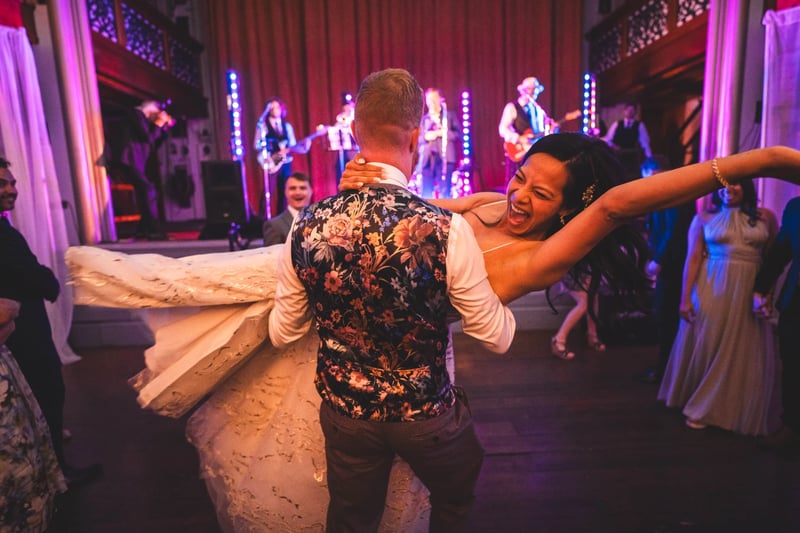
Remember, your day doesn’t have to run in this order, and there are many things that might make certain elements of the day run longer than we’ve written above – read on for reasons your big day might run to a different schedule.
Cultural and religious traditions – For example, many Indian weddings span over several days and Hindu ceremonies are traditionally over two hours, with food breaks built in.
The type of wedding – A traditional wedding will often last from late morning through until late at night, while a destination wedding might only last a couple of hours.
The time of the ceremony – Traditionally, couples get married around lunchtime, but twilight weddings are becoming more popular and start later in the day – especially if you’re getting married somewhere hot and want to wait for the heat to die down.
The formality – Less formal weddings will usually have a more relaxed structure as they’re often far more intimate and shorter.
The size of your guest list – The larger your guest list is, the more likely you’ll need to allow extra time for arrivals, transport, seating, photos and more.
The time of year – Believe it or not, the season your wedding takes place in can also have an effect, especially during the winter when you might need to account for icy or snowy conditions.
The location of your venues – The location of your venues (if your ceremony and breakfast/reception venue aren’t at the same place), specifically if they’re far apart from each other, can potentially slow things down.
Example Wedding Day Timeline
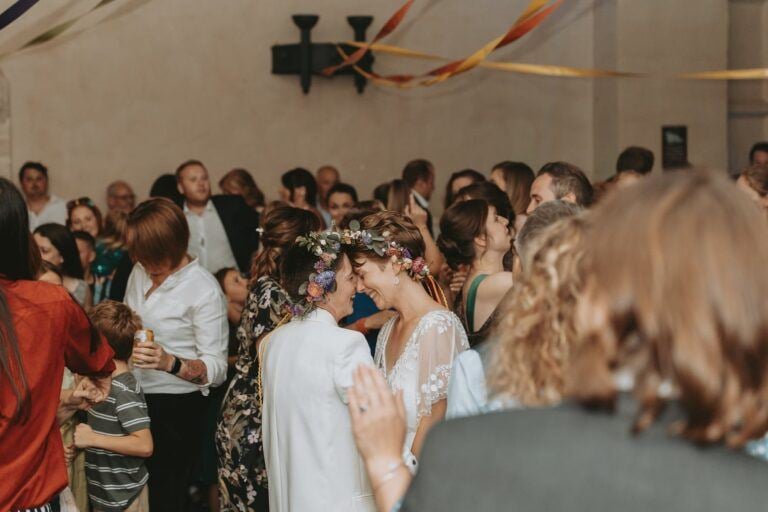
Traditional wedding ceremonies tend to start between 11 am and 2 pm. The below example of a traditional wedding day timeline is what your day might look like if your ceremony were to start at midday.
7 am – Your alarm goes off and it’s time for a shower (speak to your hairstylist beforehand about whether or not you should wash your hair that morning or not).
7.30 am – Breakfast. Don’t skip this step because you’ve got a long day ahead of you. You might want your wedding party to join you and start the celebrations early with a Buck’s Fizz to kick off the vibe.
8 am – If you’ve hired a photographer, they’ll arrive to capture everyone getting ready. Your hair and makeup artist(s) will likely arrive around the same time.
8.15 am – Hair and makeup starts on the wedding party (if they’re doing it for them).
9 am – The flowers and bouquets are delivered and the vendors you’ve hired will arrive at the venue to start setting everything up.
9.30 am – Your hair and makeup start.
10.30 am – You get dressed. At the same time, your partner will head to the venue to begin greeting guests.
11 am – Wedding party photos and the wedding transport arrives (if you need it).
11.30 am – You will set off for the venue as your final guests arrive.
11.45 am – Your guests are asked to take their seats.
11.55 am – You arrive at the venue and everyone takes their place. The photographer will take some last-minute photos of you and whoever you are walking down the aisle with.
12 pm – The ceremony starts.
12.45 pm – The ceremony ends and the couple leaves the venue with the photographer for photographs, also joined by friends and family.
1 pm – Guests head to the breakfast and reception venue (if elsewhere). Canapés and a welcome drink may be served.
1.30 pm – The couple arrives at the venue.
1.45 pm – Everyone takes a seat for the wedding breakfast.
2 pm – The starters and main courses are served.
3.15 pm – The wait staff start pouring flutes of fizz for the speeches.
3.30 pm – The speeches start, usually with the father of the bride.
4 pm – Dessert is served.
4.45 pm – Guests leave the dining area so it can be turned around for the evening reception. The couple mingles with guests.
6.30 pm – Evening guests start to arrive.
7 pm – The cutting of the cake.
7.15 pm – The couple may have ‘golden hour’ photographs if the location and weather are suitable.
7.30 pm – The evening reception starts with a DJ and/or live music.
7.45 pm – The first dance.
8 pm – The evening buffet is opened.
9 pm – You and your guests enjoy celebrating your wedding.
11.45 pm – The couple leaves the venue.
12 am – The evening reception finishes and your guests leave the venue.
Wedding Day Timeline for a Late Afternoon Ceremony
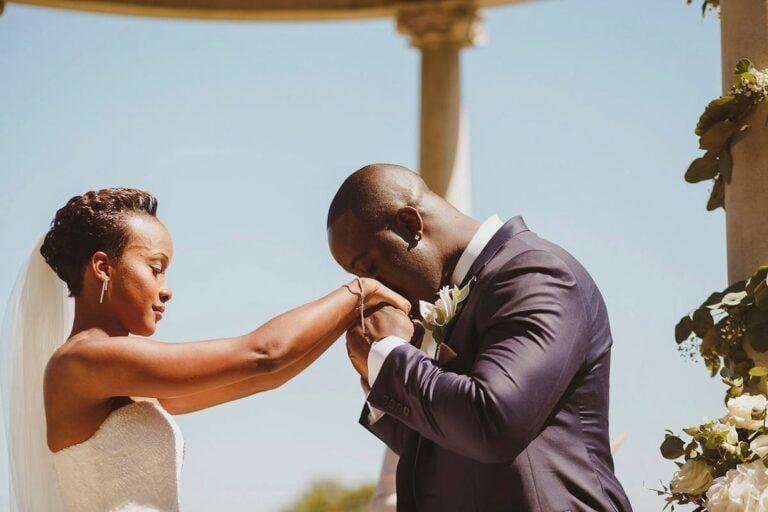
Late afternoon weddings, also known as twilight weddings, start much later in the day, which means there’s not as much time as with a traditional wedding schedule, so your timelines will alter.
Though your wedding will be shorter, some elements are longer – you’ll have much longer to get ready, for example (some people choose to have a round of golf in the morning, or even go for a swim or a run, the morning of their wedding if they’re having a later ceremony).
Later weddings are common for destination weddings in hotter countries, so you miss the midday sun, but in line with this, they can run on later into the evening, dancing ’til dawn.
Here’s an example wedding timeline for a late afternoon wedding.
8 am to 2 pm – A leisurely morning and lunchtime spent with family and friends. You may take the time to relax (a morning spa session goes down a treat) or visit your local beauty stylist to save money on hair and makeup. With extra time, get ready in a leisurely fashion while vendors arrive at the venue.
3 pm – Your partner arrives at the venue to welcome guests.
3:30 pm – You arrive at the venue and everyone gets into position before the ceremony begins.
4:30 pm – The ceremony ends.
5 pm – The couple and their guests take photographs to take advantage of the setting sun if it’s winter or enjoy late afternoon sun if you’re having a summer wedding.
6 pm – Depending on what you’ve decided to do, the wedding breakfast or evening reception and buffet will begin. This will also include the speeches, cutting of the cake and first dance.
11.45 pm – The couple leaves the venue.
12 am – The reception finishes and your guests leave the venue.
Wedding Day Timeline for a Winter Wedding
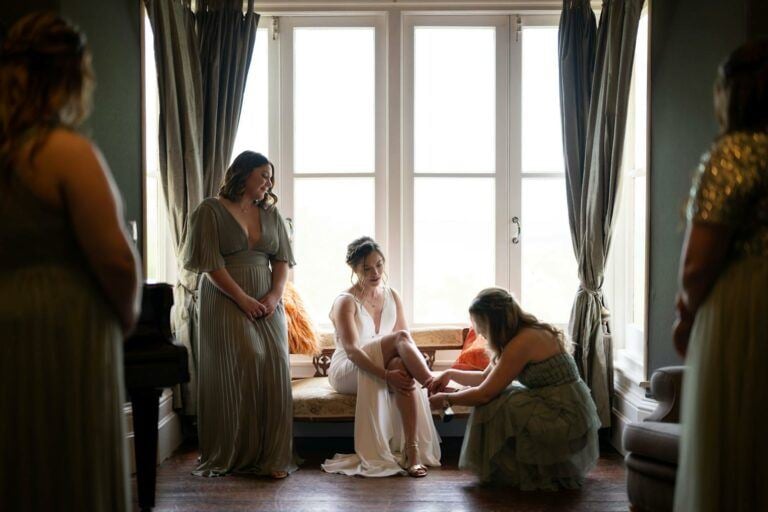
Winter weddings can feel extra magical, with early darkness making for a cosy soiree under twinkling stars – and you don’t necessarily need to rejig the whole wedding timeline – there are just a few elements that need tweaking – including photos and the wedding breakfast.
For example, if you’re getting married in the depths of winter, sunset photos might fall slap bang in the middle of the wedding breakfast if you’re sticking to a traditional wedding timeline of eating between 2 pm and 4 pm.
Consider if sunset photos are a priority for you (keeping in mind, sometimes the sun doesn’t even show its face in winter!) If they are, you might need to serve your main meal at dinner time to avoid leaving the table in the middle of the meal. If you do this, go heavy on the canapés earlier in the day to avoid hungry guests.
Other than that, a winter wedding schedule can follow the same plan as a traditional timeline.
Wedding Day Timeline for a Registry Office Wedding
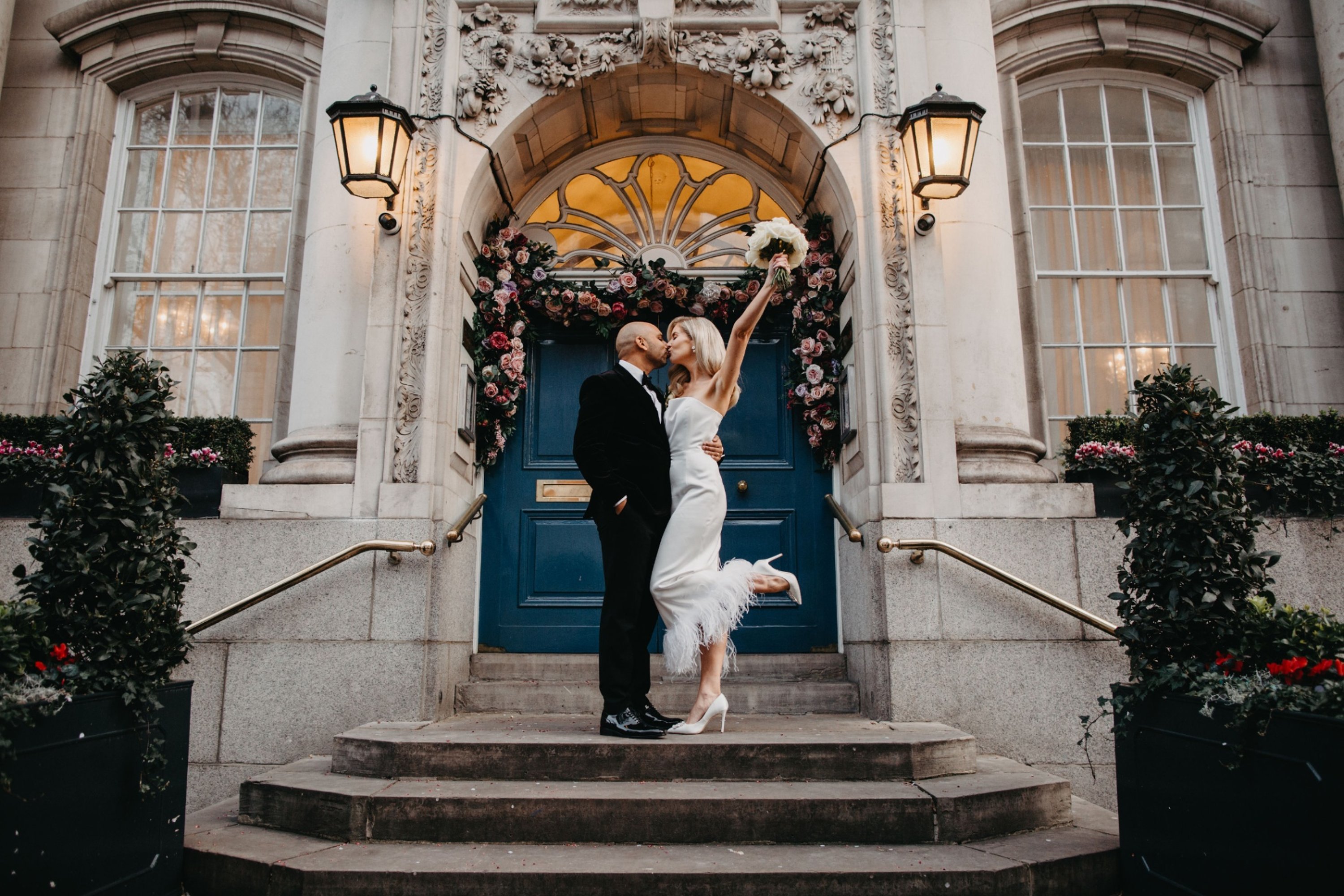
Registry office weddings are typically more streamlined than a traditional wedding day, with fewer individual steps and a more relaxed pace. If you’re having a registry office wedding, here’s what your day might look like:
8 am to 10.30 am – A leisurely morning with family and friends close by. Make sure you have a good breakfast – it’s a long day ahead. If you’re keeping costs down, this is a good time to either do your own hair and makeup or visit a hairstylist and makeup artist rather than having them come to you.
11 am – Get ready with your nearest and dearest.
12.30 pm – Set off for the registry office.
12.50 pm – Arrive at the registry office and your guests take their seats. If you’ve hired a photographer, they’ll begin capturing everyone as they arrive.
1 pm – The ceremony begins.
1.15 pm – The ceremony ends.
1.30 pm – A short photography session outside the registry office with family and friends.
3 pm – Head to a local restaurant or hotel for your wedding breakfast and speeches.
6 pm – The wedding party moves on to a local pub or venue to celebrate with wider family and friends, including the cutting of the cake, the first dance and an evening buffet.
Tips for Planning Your Wedding Day Timeline
Even if you’re following our structured wedding timeline example, things can go awry with a wedding day schedule. There are a few hurdles we see couples fall at time and time again – here are the sticking points to watch out for.
Allow buffer time between events: If you know you’re going to get stressed if the schedule doesn’t run on time, build buffer time between each element of the day. Add 10 minutes either side of parts which could run over. Some elements of the itinerary (cake cutting, first dance and speeches, for example), don’t need to run bang on time.
Coordinate with suppliers (this is a major factor of your wedding planning checklist, too): Chat to your suppliers about the time you want them to arrive. Give them your planned timeline and check if that works for them, or if they want more or less time. Remember, they do this for a job and know best how long they’ll need, so liaising with them will help plan your wedding day timelines.
Plan photography time carefully: If you’ve been to more than a handful of weddings, you’ll know it’s fairly common to lose the couple for hours at a time as they get their perfect shots.
Build this into your schedule and give one of your wedding party the job of rounding people up when it’s their time to be photographed. Again, consider the time of day of your wedding – if you want sunset hour photos at your summer wedding, organise this to be post-food and speeches. If you want winter sunset photos, make sure you move your wedding breakfast to later in the day.
How to Build Your Wedding Timeline
Using our wedding timeline template, you’re in a good position for planning your own timeline, but everyone’s day will vary. Consider these elements when scheming your wedding day schedule.
1. Start with the ceremony time
When you know the time your ceremony is at, you can build backwards from there, working out what time you’ll need to get up, start getting ready, make your way to the venue and so on.
Your ceremony time also dictates the afternoon schedule, including when you’ll eat, make speeches, invite evening guests to come, and wrap the whole day up.
2. Add reception events
When your ceremony time is locked in, create a rough timeline for different reception elements, such as eating (both the wedding breakfast and the evening buffet, if you’re having one), speeches, cake cutting, first dance and so on.
Once you know roughly what time you want each part of the day to happen, you need to…
3. Talk to your suppliers
To check if the time you’ve allotted is sufficient, if they’re able to arrive then, or if there’s anything they need upon arrival. Remember, your suppliers do this week in week out, they know what they’re doing and can help advise you on what time they need to be there.
Wedding Timeline & Order of the Day: FAQ
What order do things happen at a wedding?
The order in which things happen at a wedding will vary, depending on the type of wedding you’re having. However, for most couples, a typical framework looks like: getting ready, the ceremony, photographs, a drinks reception, the wedding breakfast, speeches, and the evening reception.
Other things may also be included depending on the individual style of the day, such as a first-look shoot, the cutting of the cake, and a first dance.
How long does a typical wedding day last?
For the couple and their close wedding party, a typical wedding day usually lasts between 10-12 hours in total, starting from the morning preparations (hair and makeup) to the very last dance. For the guests, the events will usually start late morning or early afternoon.
What time should a wedding ceremony start?
A typical wedding ceremony often starts somewhere between 12 pm and 3 pm, but it depends on the time of year and the type of service.
Some religious ceremonies or winter weddings can start as early as 11am, while couples hosting a twilight wedding may not have their ceremony until much later in the afternoon.
Do you need an order of the day at a wedding?
It’s important to have some kind of order of the day for you, your wedding party and your suppliers, so everyone knows where they need to be and when. For your wedding guests, it’s perhaps less important, but a rough guide or simple list of what to expect will help them feel more comfortable and prepared.
How far in advance should you plan your wedding day timeline?
Aim to have your wedding day timeline finalised around 1-3 months ahead of the day. This will give you, your suppliers and guests, enough time to prepare.
Some suppliers, such as your wedding ceremony venue for example, will naturally require more notice than this.
Plan your wedding timeline with Bridebook
Now that you know some rough timelines that wedding days often follow, you can start planning your own big day exactly as you like it. Sign up to Bridebook to get access to all the tools, information and resources you need so you can plan your perfect wedding.
Why Trust Bridebook
Bridebook is the world’s #1 wedding planning platform, used by over 2.8 million couples. Our content is informed by real data from the Bridebook UK Wedding Report, which draws on responses from thousands of couples planning their weddings each year. Where expert input is included, contributors are named and their credentials verified. We update our articles regularly to ensure prices, statistics, and advice reflect current market conditions.
You Might Also Like…
- The Ultimate Wedding Ceremony Guide
- How to Choose Your Wedding Party
- Everything You Need to Know about Page Boys
- Everything You Need to Know about Flower Girls
Related articles