The Wedding Spend: A Country House Wedding in Surrey for £21,400

Priya and Daniel got married on a Friday in May in Surrey. They spent just under the South East average. Here’s exactly where every pound went – and the moment they realised their wedding budget had a mind of its own.
- The couple: Priya & Daniel*
- The region: South East England
- The wedding date: Friday 8th May, 2026
- The guest numbers: 65 day guests
- Total spend: £21,400
When Priya and Daniel started their search for a Surrey venue, they had a number in their heads: £20,000. Comfortable. Manageable. Sensible.
They found their venue on a Thursday evening in October, drove to see it the following weekend, and booked it before they’d had a chance to reconsider.
A Georgian manor house wedding venue on the edge of the Surrey Hills, gardens big enough for a drinks reception, a dining room that seated 80. It was, Priya says, “exactly what we’d always imagined without ever having admitted it.”
The Friday date was a practical decision that became a creative one. The venue was £1,800 cheaper than a Saturday, and the coordinator mentioned almost in passing that Friday couples tend to get more of the team’s attention.
“Everyone said guests wouldn’t come,” says Daniel, an engineer from Guildford. “Sixty-five people came. Our friends took the day off. My uncle drove from Edinburgh. People show up for the people they love – the day of the week is just logistics.”
Priya, who works in brand marketing, had strong opinions about a few things and deliberately loose ones about everything else.
Photography was non-negotiable. They hired a documentary-style wedding photographer at £2,100 – above the national average, and the one area of the budget they consciously chose to exceed.
“We looked at portfolios for weeks. You spend so much time on things that last a day. The photos last forever.”
Catering was where the budget crept. The venue had an in-house caterer, which simplified the logistics, but a set menu for 65 with a drinks reception, three courses and a wine package came to £7,200. It was more than they’d planned. “We kept saying we’d cut the wine package,” says Priya. “We never did.”
They chose not to have a videographer – a decision Daniel now has mixed feelings about. “The photos are incredible. But there are moments I can’t quite reconstruct. My best mate’s speech. The first song. I think I’d go back and add a videographer if I could.” It’s the one line item missing from their spend table that he notices.
This is the one regret previous Wedding Spend couple Jess and Tom shared – read their wedding budget story here.
Evening food was a deliberate skip, same as the drinks package extending through dinner. By 9pm, guests were on the dancefloor with the DJ they’d booked through a recommendation from the venue. No one asked for a late-night buffet, but Priya admits that it helps that they skipped having evening guests.
The flowers were the area Priya enjoyed spending on most. A local florist in Dorking did the ceremony arch, table arrangements and buttonholes for £1,600 – more than the national average, but something Priya describes as “the thing that made the room feel like us.”
They used dried and seasonal garden flowers, which kept costs down while still feeling full and considered.
The dress came from a boutique in Wimbledon and cost £1,750. Priya had set a limit of £1,500, tried on the one that cost more, and made peace with it quickly.
Daniel wore a charcoal morning suit hired rather than bought, which came to £320 for him and his best man.
The one place they genuinely saved without feeling it: stationery. Digital invitations for the save the date, printed orders of service only, a chalk signage board borrowed from a friend. Total stationery spend: £95.
“Nobody mentioned the digital invites. Everyone mentioned the flowers.”
Their total came in at £21,400 – just under the South East average of £22,637, and a little above the UK national average of £20,604. The gap between the £20,000 in their heads at the start and the final number wasn’t dramatic, but it was consistent: almost every category came in slightly above what they’d originally planned, because almost every decision felt worth it at the time.
“I don’t regret a single thing we spent money on,” says Priya. “I just wish I’d started the budget at £22,000 instead of £20,000 and saved myself the spreadsheet anxiety.”
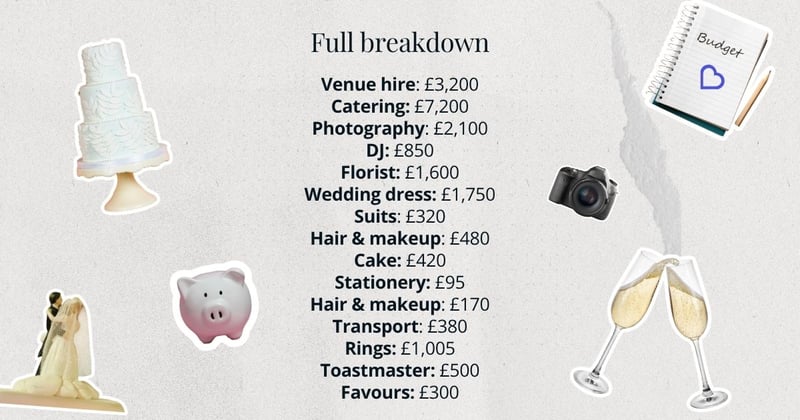
The Spend Table
| Category | Spend |
|---|---|
| Venue hire (Friday, exclusive use) | £3,200 |
| Catering – drinks reception, three courses, wine (65 guests) | £7,200 |
| Photography | £2,100 |
| DJ | £850 |
| Florist | £1,600 |
| Wedding dress | £1,750 |
| Menswear (morning suit hire for two) | £320 |
| Hair and makeup | £480 |
| Cake | £420 |
| Stationery | £95 |
| Transport | £380 |
| Rings | £1,005 |
| Favours and extras | £300 |
| Toastmaster | £500 |
| Total | £21,400 |
*Names have been changed. Figures reflect actual spend. The UK national average wedding cost is £20,604 (Bridebook, 2026). The South East England average is £22,637.
Related articles