Wedding Stationery Costs: How Much Does Wedding Stationery Cost in the UK?

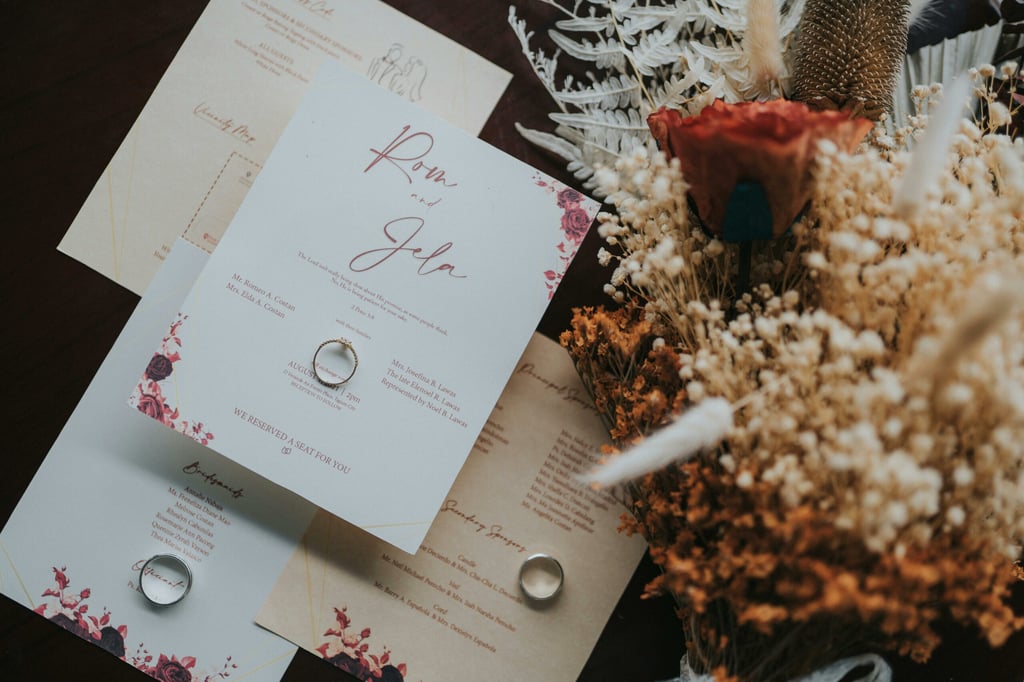
Planning a wedding involves hundreds of decisions, but few feel quite as immediate as wedding stationery costs. It’s one of the first things you buy and one of the first things your guests receive, and it keeps working right the way through, from save the dates sent a year in advance to thank you cards written from the honeymoon suite.
According to Bridebook’s Wedding Report, UK couples spend an average of £378 on professionally designed and printed stationery, but that figure spans everything from a £20 Etsy template to a £1,500 bespoke illustrated suite. This guide breaks down exactly what each piece costs in 2026, where the genuine savings are, and what you actually need to spend money on.
How much does wedding stationery cost in the UK?
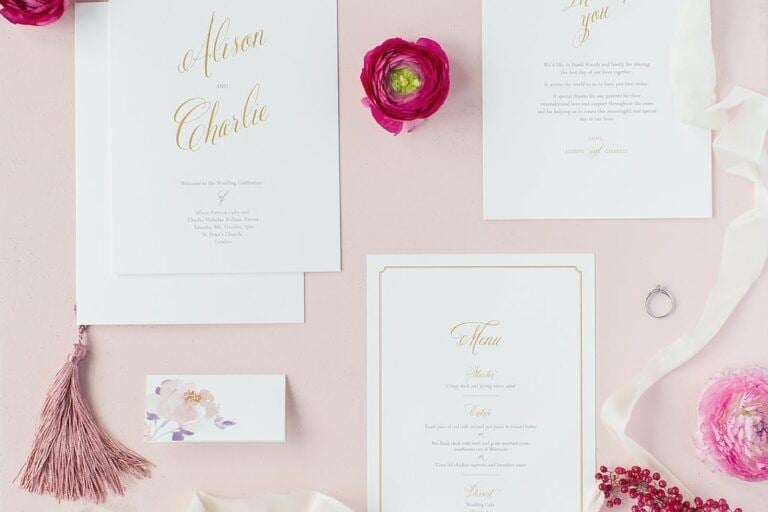
The short answer: as much or as little as you want it to. Bridebook’s research puts the UK average at £378 for a full stationery suite, covering everything from save the dates to post-wedding thank you cards. But that figure covers a wide spectrum, and where you land on it depends entirely on the choices you make.
Here’s a simple overview by budget tier:
| Budget tier | Approx. total spend | What this typically looks like |
|---|---|---|
| Budget (DIY/digital) | Under £100 | Digital invitations, printable templates, minimal print run |
| Mid-range | £150–£400 | Professionally printed suite, standard finishes, online design tools |
| Premium/bespoke | £500+ | Custom illustration, luxury printing techniques, full suite |
As explored in Bridebook’s ultimate wedding budget breakdown, stationery typically accounts for a relatively small percentage of total wedding spend, which makes it one of the easier areas to trim if you need to free up budget elsewhere.
Wedding stationery costs broken down by item
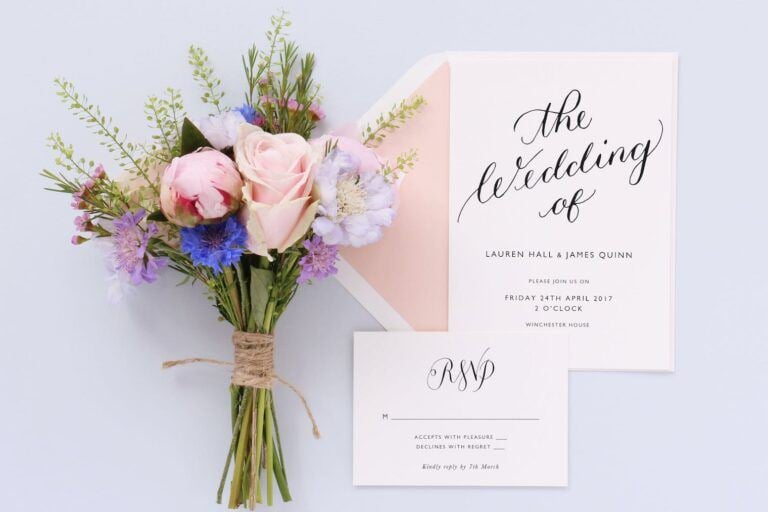
This is the section most couples actually need. Rather than a vague total, here are realistic per-item UK price ranges for professionally produced stationery. DIY and digital options will bring most of these costs down significantly.
| Item | Price range |
|---|---|
| Save the dates (printed) | £0.50–£2 per card |
| Save the dates (digital) | Free |
| Invitations (budget) | £1–£5 each |
| Invitations (mid-range) | £5–£15 each |
| Invitations (bespoke) | £15–£30+ each |
| RSVP cards | Often bundled with invites or cut entirely |
| Order of service | £0.50–£3 per copy |
| Table plan/seating chart | £20–£150 |
| Place cards | £0.30–£2 each |
| Menus | £0.50–£3 per guest |
| Thank you cards | £1–£4 each |
A note on invitations specifically: ordering in larger quantities brings the per-unit cost down. Bridebook’s supplier data shows 40 invitations might come out at around £3.35 each, while ordering 50 or more can drop that to £2.15 each. If you were thinking about framing a couple or giving spares to family, go ahead — it can actually reduce your overall spend.
Worked examples at three budget levels
Here’s what a full suite for 50 guests might realistically cost at each tier:
Budget suite (~£100)
Digital save the dates (free) + printable invitations from an Etsy template (approx. £30 for the template and home printing) + DIY place cards + printed order of service (approx. £50–£75 via an online printer) + printable thank you cards.
Mid-range suite (~£300)
Professionally printed save the dates (approx. £55) + printed invitations with RSVP cards (approx. £130) + order of service (approx. £50) + place cards and table numbers (approx. £40) + thank you cards (approx. £55).
Premium suite (~£600+)
Full professionally designed suite with luxury paper stock, coordinated across all items. At mid-range paper prices, smooth matte stock runs to around £1.33 per piece, while luxury pearl finishes push closer to £1.60 — and that’s before any specialist printing techniques are factored in.
How to save money on wedding stationery
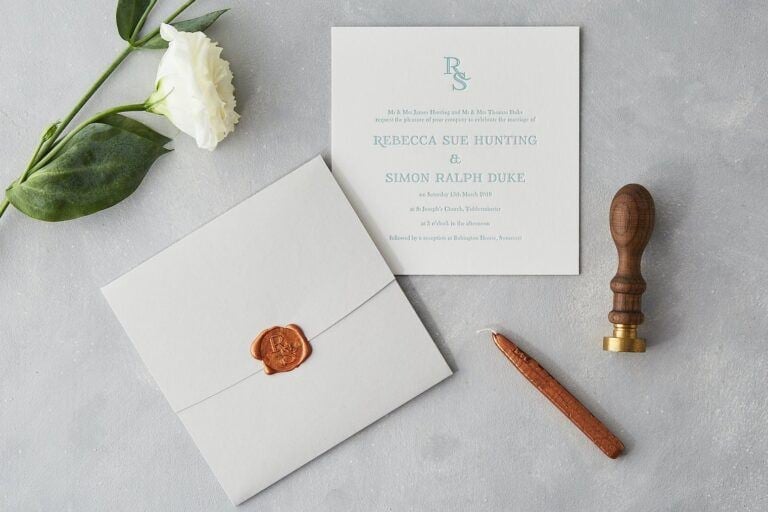
This is where a bit of planning pays off. Cheap wedding stationery doesn’t have to mean cheap-looking — it just requires knowing which levers to pull. Here are the most effective ways to keep costs down.
Go digital with invitations
Digital invitations cost nothing to send and have come a long way in terms of design quality. Canva is one of the best free tools out there for creating polished digital wedding invites, and many couples use it to produce both digital and printable versions from the same template.
Use Etsy for printable templates
Etsy is packed with beautiful, affordable wedding stationery templates designed by independent creatives. You pay a one-off fee (often £5–£20) for an editable template, customise the text yourself, and either print at home or send the file to a local printer. The results can look just as stunning as professionally designed stationery — for a fraction of the price.
Use budget online printers
Vistaprint and similar online print services offer competitive rates for standard print runs, particularly for items like save the dates, thank you cards and menus. Prices drop significantly with volume, so ordering in one go rather than topping up later keeps things economical.
Print at home where it makes sense
For lower-stakes items — place cards, table numbers, menus — home printing is a perfectly viable option. A decent home printer and some quality card stock from a craft shop can produce results that are hard to tell apart from a professional print run.
Cut the pieces you don’t actually need
RSVP cards are a prime candidate for removal. If your wedding website handles RSVPs (which Bridebook can help you set up as part of your planning), there’s no need to print them at all. Similarly, printed menus can be skipped entirely if you use a menu board or chalkboard sign at the venue.
Trim your guest list
This is the one most couples overlook, but the maths is straightforward: fewer guests means fewer invitations, fewer menus, fewer place cards, and fewer thank you cards. Cutting 20 guests from your list can easily save £50–£100 in stationery alone before you’ve changed anything else.
For a full overview of ways to reduce costs across the board, Bridebook’s guide to saving money on wedding stationery has plenty more ideas.
How much does bespoke wedding stationery cost?
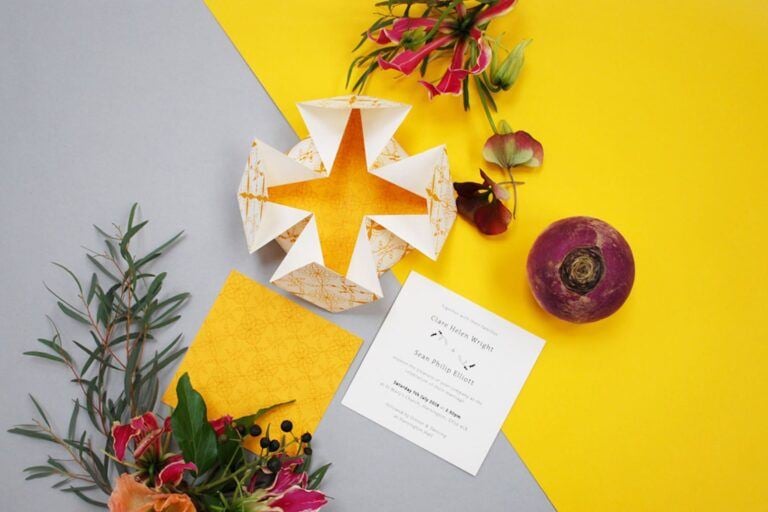
Bespoke wedding stationery means something created specifically for you — custom illustrated, hand-lettered, or produced using specialist printing techniques that simply can’t be replicated on a standard press. The results can be genuinely extraordinary, but the price reflects the craft involved.
What drives the cost of bespoke stationery?
Custom illustration: Having an artist create an original illustration — whether it’s a portrait of the couple, a map of a meaningful location, or botanical artwork — is one of the biggest cost factors. Illustrators typically charge £100–£500+ for original artwork, depending on complexity and their experience level.
Foiling: Gold, silver or rose-gold foil detailing adds a premium feel and typically adds £1–£3 per piece on top of standard print costs.
Letterpress: One of the most tactile and beautiful printing methods, letterpress presses ink into thick card to create an embossed effect. Expect to pay £3–£10+ per card, depending on the complexity of the design and number of colours.
Hand calligraphy: Having names or addresses written by a calligrapher adds a personal touch that digital printing can’t replicate. Calligraphers typically charge £1.50–£5 per envelope or place card.
Realistic UK price ranges for bespoke stationery:
| Bespoke element | Typical UK price range |
|---|---|
| Custom illustrated invite suite (50 guests) | £400–£900+ |
| Foil-printed invitation only | £5–£15 per invite |
| Letterpress invitation only | £8–£20 per invite |
| Hand-calligraphed envelopes | £1.50–£5 each |
| Full bespoke suite with premium printing | £600–£1,500+ |
Is bespoke stationery worth it?
For couples who see stationery as an important part of their wedding aesthetic — or who want something genuinely unique to keep as a memento — bespoke can absolutely be worth the investment. The key is being specific about which elements you want bespoke (the invitation, typically) and keeping other pieces, like order-of-service booklets or place cards, at a simpler price point.
For expert guidance on this, Bridebook has advice on wedding stationery from Papeterie Eugénie, which is well worth a read before you commit to a stationer.
What wedding stationery do you actually need?
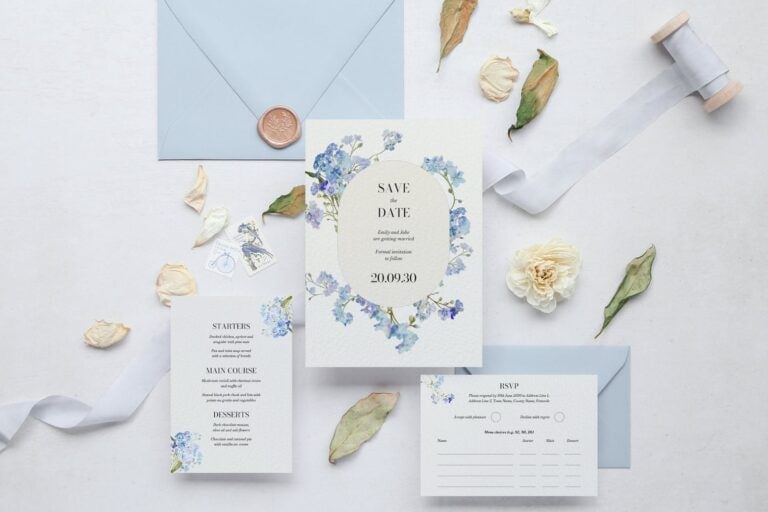
It’s less than you think. The stationery industry has historically been very good at convincing couples that they need a perfectly coordinated 10-piece suite. In reality, most weddings run perfectly well with a much shorter list.
The essentials
These are the pieces that do genuine practical work:
- Invitations — non-negotiable (though digital is fine)
- Order of service — important for ceremony-heavy or religious weddings; optional for civil ceremonies. Can be a single display board at the entrance or individual printed booklets for each guest
- Seating plan or table chart — essential if you have more than 30 or so guests
- Place cards — needed if you have a seating plan
The nice-to-haves
These add atmosphere but can be cut without impacting the day:
- Save the dates (essential for destination weddings or busy guests; optional otherwise)
- RSVP cards (unnecessary if using a wedding website)
- Menus (a menu board does the same job)
- Table numbers (can be repurposed décor items instead)
- Welcome signs
The genuinely optional
- Favour tags
- Wax seal envelope closures
- Printed maps and direction cards (Google Maps exists)
- Information booklets (your wedding website covers this)
Bridebook’s data suggests couples can cut 30–40% of typical stationery spend simply by being selective about which of these optional pieces they actually want. The introduction to wedding stationery on Bridebook is a good place to start thinking through what’s right for your wedding.
Wedding Stationary FAQs
How much does wedding stationery cost in the UK?
The UK average for a professionally designed and printed full wedding stationery suite is £378, according to Bridebook’s wedding data. Budget-conscious couples can spend well under £100 by using digital invitations and printable templates, while those opting for bespoke or luxury stationery can expect to spend £500–£1,500 or more.
How much do wedding invitations cost?
Professionally printed wedding invitations start from around £1.50 per invite for a single-sided design. Double-sided invitations start from £2 each, and wallet-style suites from £2.50 each. Bespoke invitations with specialist printing techniques like foiling or letterpress typically cost £5–£20+ per invite.
What is the cheapest way to do wedding stationery?
The most cost-effective approach is to use digital invitations (free via tools like Canva) or to purchase a printable template from Etsy and either print at home or use a budget online printer like Vistaprint. Cutting RSVP cards (to use a wedding website instead) and trimming your guest list are the two biggest savings levers.
Is it cheaper to make your own wedding stationery?
Yes, DIY wedding stationery can reduce costs significantly — particularly for a smaller guest list. The main costs are card stock and printer ink, plus any design tools or templates. The trade-off is time: creating, printing, and assembling stationery for 80 guests is a bigger undertaking than it sounds. Budget carefully for materials before assuming DIY is always the cheaper option.
How much does bespoke wedding stationery cost?
Bespoke wedding stationery costs depend heavily on what’s involved. A full custom suite with original illustration and premium printing techniques can run from £600 to £1,500+ for a mid-sized guest list. Choosing one bespoke element — like a custom illustrated invitation — and keeping everything else simpler is a practical way to get the look without the full price tag.
What stationery do you actually need for a wedding?
Invitations are non-negotiable. A seating plan and place cards are essential for most weddings. An order of service is useful for religious or ceremony-heavy celebrations but not always needed. Everything else — save the dates, printed menus, welcome signs, RSVP cards, favour tags — is optional. Most couples can trim 30–40% of their stationery budget simply by being selective about which of those optional pieces genuinely earn their place on the day.
Start planning your wedding with Bridebook
Ready to get your stationery sorted alongside everything else? Bridebook has a wide range of wedding stationery suppliers to help you find the right fit for your budget and style — from affordable online designers to specialist bespoke studios. Sign up and start planning your big day today.
You Might Also Like…
- The Ultimate Wedding Budget Breakdown
- The Average Cost of a UK Wedding in 2026 is £20,604
- How to Save Money on Wedding Accessories
- How to Save Money on Your Wedding: The Ultimate Cost-Cutting Guide
Happy Planning!
Related articles