How Long Should You Date Before Getting Engaged?

If you’ve been in a relationship for a while (or even if it’s been something of a whirlwind romance), then you may be wondering, how long should you date before getting engaged?
The quick answer to this question is… it depends. It depends on how you feel, how your partner feels, and if you think now is the right time to take things to the next stage. Because you’re the only one who can accurately answer that question about your life.
The truth is, there’s no set timeline and every relationship is different.
How Long Do Couples Date Before Getting Engaged in the UK?

First thing’s first, couples’ individual timelines vary hugely according to things like age, financial readiness, and personal goals. It’s also important to remember that you shouldn’t compare your own relationship to that of other couples.
While one to three years is typically viewed as the standard ‘window’ to get engaged, plenty of couples get engaged way before and way after this timeframe.
When it comes to relationships, there’s no such thing as ‘normal’.
How Long Are Engagements in the UK?
According to Bridebook’s UK Wedding Report 2026, the average engagement length is 23.8 months, with 20% of couples in the UK getting married within 12 months, and 68% tying the knot within 24 months.
This contrasts with last year’s data, when 22% of engagements lasted under 12 months and 64% under 24 months, so engagements are getting a little shorter. Plenty of couples still give themselves two years or so, though, to secure their venue, save up and get the most popular dates before they book up.
We’ve got everything you need to know about what to book when in our guide to your 12-month wedding planning timeline.
What is the Average Age to Get Engaged & Married in the UK?
Bridebook’s UK Wedding Report also reveals the age couples are tying the knot, with the average being 34.8 years.
According to the stats, 39% are aged 30 or under, and 20% are over 40.
This, combined with the most recent data from the Office of National Statistics (ONS) where the average age at opposite-sex marriage in England and Wales is 34.8 years for men and 33 years for women, reveals that many couples are doing it a little later in life than we used to a generation or two ago.
It’s becoming more common for people to focus their younger years on their careers – which means the whole marriage (and in some cases, children) thing is getting pushed back. And that’s completely OK. There is no ‘right’ age.
Is There Such a Thing as Getting Engaged Too Soon?

No – what matters is that you’ve talked about the big things.
Getting married is a huge deal. Even if it feels completely natural and is 100% the right thing to do for your future, it’s still a massive decision to make.
For some people, making that decision isn’t easy. But that doesn’t mean you’re any less right for each other than couples who choose to jump in much faster.
There’s no such thing as the right time to get married. There’s no one-size-fits-all answer. Some couples get married right in line with the average, some much more quickly, and others decide to wait indefinitely.
There are a million and one reasons why this might be, but we’ve run through some of the most common below, to show you that waiting (for whatever reason) shouldn’t be the cause of any stress – because every reason is valid.
Emotional readiness
Being in love is one thing. Being ready to build a life together, to last for the rest of your lives, is another thing altogether.
Some couples want to test their communication and the ability to handle the not-so-romantic stuff, like paying bills and family drama, before committing. You may not even think of it as emotional readiness – which isn’t quite the same thing as emotional maturity. You just need to be sure that you’re prepared to take on all the emotions that come not just with an engagement and wedding, but also for as long as the two of you are together.
Once you’re emotionally ready, it lays the groundwork for a long and happy marriage.
Life logistics
While you may know that you’re committed to your partner and are sure you ultimately want to build a future with them, there might be a few other things you need to take care of first. And those ‘few other things’ might actually be pretty huge.
It could be that you’re in the process of forging your dream career. Or maybe you want to be free from a big loan repayment. Or you’re still trying to figure out a long-distance relationship.
When you have other things on the go, it can take up a lot of space mentally. The last thing you need when planning a wedding is long workdays, tons of travelling or a big move.
In most cases, getting engaged can wait. After all, you’re still together – that’s not changing – and for many people, time is on your side.
Family and cultural expectations
Every family – and every culture – tends to have its own unspoken (or very loudly spoken!) timeline when it comes to the rules of relationships. In some cultures, it’s perfectly normal, even expected, to talk about engagement before you’ve even celebrated your first dating anniversary. There might be gentle nudges from relatives, or not-so-subtle questions at every family gathering, like, ‘So, when are you getting down on one knee, then?’
It’s worth remembering that these expectations can influence how you and your partner feel about your timeline. Sometimes it’s external pressure, sometimes it’s a shared cultural value you both want to respect. Either way, it’s added pressure that can get rather overwhelming.
Talking openly about these influences can help you both understand where the other is coming from, to help you figure out a path that feels right for you.
Personal priorities
Maybe you’ve both got big dreams that you want to tackle before getting married, like travelling the world, buying a home or reaching certain career or personal milestones. Many modern couples are choosing to focus on building that foundation before popping the question, especially if they’re still young.
Taking time to grow together, plan and feel truly ready isn’t just practical; it’s a thoughtful way to start a marriage on a strong footing.
We’ve got more on this in our article on how soon is too soon to talk about marriage…
Signs You’re Both Ready to Get Engaged

You can’t force an engagement, or marriage – it’ll only feel right to you when everything slots into place, whatever that might look like to you.
Forget the calendar. What really matters is the quality of your relationship, not the number of days it might have been since your first date.
Here are five signs you might be ready:
1. You can argue without threatening to break up
Couples who are in a good place know that disagreements are normal. They happen all the time, from the big stuff to the little stuff.
You’ve likely had your fair share of spats over things like bills, plans or whose turn it is to change the bins, but you handle them without ultimatums. You find it easy not to fight, and if you do, you make up quickly. You don’t throw out hollow threats or escalate things more than you need to. Instead, you’ve learnt to cool off, talk it through and find solutions together.
The fact that you fight fair (and make up again) is a huge green flag for engagement readiness.
2. You know each other’s stress triggers (and how and when to soothe them)
Over time, you’ve learnt what makes each other tick… and what makes each other sick. Maybe you know your partner needs space after a long day, or they know that bringing you an iced coffee instantly cheers you up.
You’ve developed little rituals and habits that calm the other person down, showing a deep level of care and awareness that only comes with a strong bond.
3. You trust each other’s decisions and respect each other’s independence
You’ve likely been together for some time now, so you’ve become a great team. But you’re also two individuals with your own thoughts, dreams and opinions. You trust each other to make choices without second-guessing or micromanaging, from the big stuff like careers to the small stuff like what to pick up for dinner that night. You respect each other’s need for space and independence, knowing it doesn’t take away from the relationship; it strengthens it.
4. You still want to be together even when it’s hard, messy or just boring
For the most part, life is great with your other half, right? Even so, there will be the odd time when things aren’t quite as fun or glamorous. Sometimes it’s passing out on the sofa mid-film, and other times it’s consoling the other person when they don’t get that job they really wanted.
If you’ve experienced those less-than-perfect moments in life and still feel like this is your person, that’s a strong sign you’re ready for a lifelong commitment.
5. You feel safe, both emotionally and physically
A destined-for-forever relationship is about knowing you can drop your barriers and be yourself without judgment. You can cry in front of them, share your weird little quirks or admit your fears, and they love and respect it all. That emotional security is an incredible foundation for a partnership that will last forever.
If these resonate with you, then maybe it is time to take things to the next level?
Questions to Ask Each Other Before Getting Engaged

If you’re umming and ahhing over whether now is the time for you to get engaged, there are a few questions you can ask that might help you decide if you should or shouldn’t wait a little longer:
- Do we handle conflict in healthy, respectful ways?
- Have we talked about money openly and honestly?
- Do we want similar things when it comes to family and lifestyle?
- How do we support each other’s growth, both individually and together?
- Are we aligned on where and how we want to build our life?
If you can answer these positively and confidently, then whether it’s been eight months or eight years, you may well be ready to take things to the next stage.
For more intel, read our article featuring 15 conversations to have before the engagement ring comes out.
FAQ

What is the 3 6 9 rule for dating?
The 3-6-9 rule is a kind of relationship framework that’s been popular on social media. It breaks down the first nine months of a relationship into three stages, with tips on how to navigate each one.
The first three months are said to be the ‘honeymoon stage’, where you should enjoy the connection with your partner but avoid making any major life commitments. Three to six months in is when the shine of the honeymoon stage starts to wear off, and you should start to pay attention to how you and your partner navigate conflict.
The final three months (6-9) is when behavioural patterns become clear, and you should start to think about if this is someone you want to be with long term.
What is the 7 7 7 rule for marriage?
Another set of viral relationship guidelines, the 7-7-7 rule for marriage is said to help couples beat the burnout of daily life and stop them drifting apart emotionally by intentionally scheduling time together. The breakdown is as follows:
- Every seven days: Have a planned date night
- Every seven weeks: Do an overnight getaway together
- Every seven months: Take a longer romantic holiday
Is it normal to get engaged after a year?
Lots of couples will choose to get engaged after a year, while others will wait much longer.
The important thing to note is that there is no ‘normal’ – every relationship is different and the right time to get engaged is different for every couple.
Is it normal to be together for years before getting engaged?
Yes, lots of couples will wait years before getting engaged. There is no universal timeframe, as timelines will vary depending on things like age, financial stability, and personal goals.
Should you live together before getting engaged?
There’s no rule that says you must live together before getting engaged, but many couples do.
Living together does give you more of an insight into things like your partner’s daily habits, how you will cope managing financial matters together and your conflict-resolution skills, all of which can be helpful to understand in full before you agree to marry someone.
How long after getting engaged do most couples get married?
According to Bridebook data, the average length of engagement is 23.8 months.
20% of couples in the UK get married within 12 months, and 68% within 24 months.
Think a Proposal Could Be Coming? Get Ready to Plan…
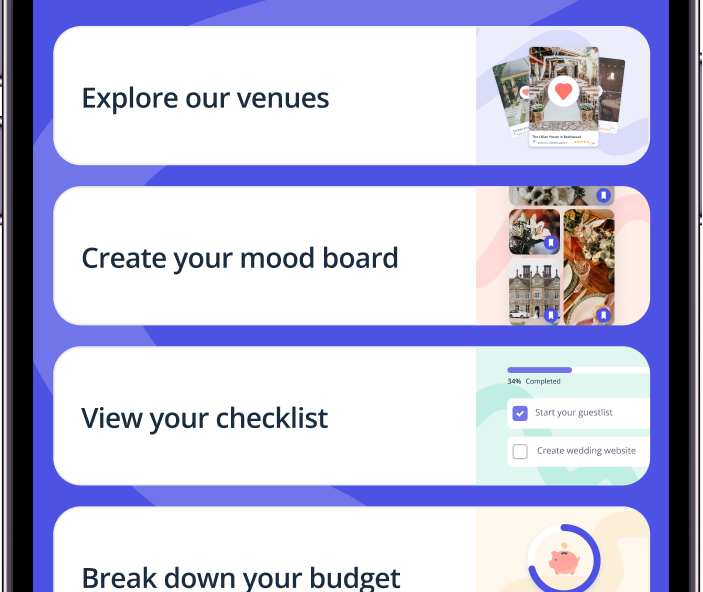
If you’ve decided now could be the time to accept a proposal or pop the question, sign up to Bridebook, the UK’s #1 wedding planning platform used by over 2.8 million couples, so you can view and save venues, set a budget, and start your checklist the moment you’re ready.
Want more on what to do next? Here is our list of the top 20 things to do after you get engaged.
Why Trust Bridebook
Bridebook is the UK’s #1 wedding planning platform, used by over 2.8 million couples. Our content is informed by real data from the Bridebook UK Wedding Report, which draws on responses from thousands of couples planning their weddings each year. Where expert input is included, contributors are named and their credentials verified. We update our articles regularly to ensure prices, statistics, and advice reflect current market conditions.
You Might Also Like
- How Soon Is Too Soon To Talk About Marriage? Experts And Real Couples Weigh In
- 15 Relationship Green Flags That Say You’re Headed Down The Aisle
- 15 Conversations To Have Before The Engagement Ring Comes Out
- 15 Signs Your Partner’s About To Propose (And You Might Not Even Know It)
- 20 Things To Do After You Get Engaged
Related articles