The Gen Z Wedding Index 2026: Key Gen Z Wedding Trends

A third of all engaged couples in the UK are now Gen Z. And if you’ve been scrolling on TikTok as much as we have, you probably have a picture in your head of what that means: micro-weddings, atheist ceremonies, DIY everything, no dress code.
But the data says otherwise…
Bridebook’s UK Wedding Report 2026 – drawing on the planning and spending habits of over 7,000 UK couples – reveals a generation that is deeply intentional, quietly traditional, and far more interesting than the trend pieces give them credit for.
They’re not rejecting the wedding; they’re curating it.
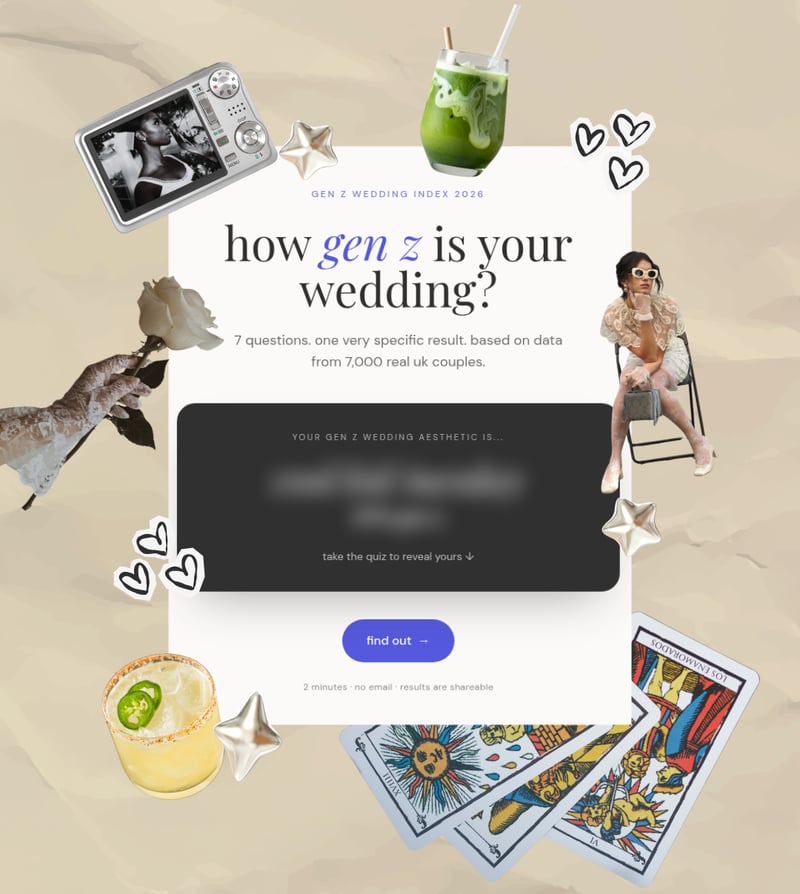
Take our quiz to find out how Gen Z your wedding is.
Gen Z Wedding Trends in Numbers
| Stat | Figure |
|---|---|
| Share of engaged UK couples who are Gen Z | 1 in 3 |
| More likely to marry in a place of worship than older generations | 25% |
| Hold their legal ceremony on the same day as celebrations | 84% |
| Increase in matching wedding outfit searches (YoY) | +801% |
| Increase in lace wedding glove searches (YoY) | +1,319% |
| Increase in ‘wedding matcha’ searches (YoY) | +747% |
The Unexpected Traditionalists
The dominant narrative about Gen Z weddings is one of rebellion: barn conversions over churches, trainers under the dress, ring pops instead of diamonds. Some of that is real, but it misses the more nuanced – and more interesting – truth.
Gen Z aren’t anti-tradition. They’re anti-hollow tradition. They will discard a convention the moment it feels performative, and reclaim one the moment it feels meaningful.
The result is a generation of couples making deeply deliberate choices – about who’s in the room, what the room looks like, and what the day actually means.
What follows is what the data shows they’re choosing, and why.
Where They’re Getting Married
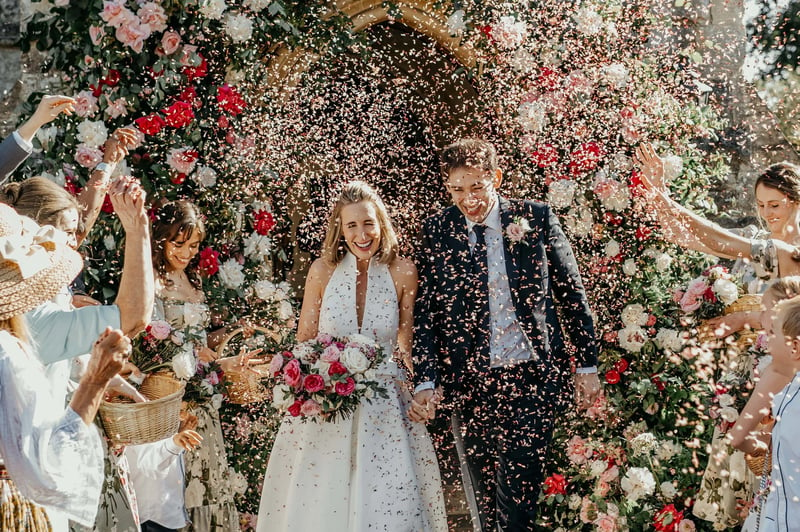
The church wedding is back. Just not for the reasons you’d expect.
Gen Z is 25% more likely to get married in a place of worship than older generations – and it has very little to do with religion.
Stone walls. Vaulted ceilings. Stained glass. Candlelight. The visual language of the church maps almost perfectly onto the dark romance, gothic cottagecore and ‘old soul’ aesthetics that define Gen Z’s Pinterest and TikTok culture. The church wedding isn’t a religious statement, but rather a set.
“Gen Z are choosing meaning over novelty,” says Zoe Burke, Head of Brand at Bridebook. “They break the rules they find hollow and reclaim the ones they find meaningful.
“Our data shows that 15% of Gen Z couples are choosing church weddings – not because their parents did, but because it photographs beautifully and feels meaningful and different. They don’t want to have the same kind of venue as everyone else.”
The knock-on effect has been the emergence of an entirely new vendor category: ceremony experience designers. Where previous generations focused almost entirely on the reception, Gen Z couples are investing in the ritual itself – the sensory architecture of the ceremony, not just the party around it.
This includes:
- Ceremony scent designers – bespoke scent installations and candle curation for the aisle and altar
- Ritual and heritage researchers – particularly popular with multicultural couples weaving two traditions together meaningfully
- Choral and classical music directors – not as background noise, but as deliberate sensory choices
The ceremony, for Gen Z, is no longer the administrative bit before the fun starts. It’s the point.
Discover wedding venues with chapels onsite.
The New Wedding Vendors You Need to Know
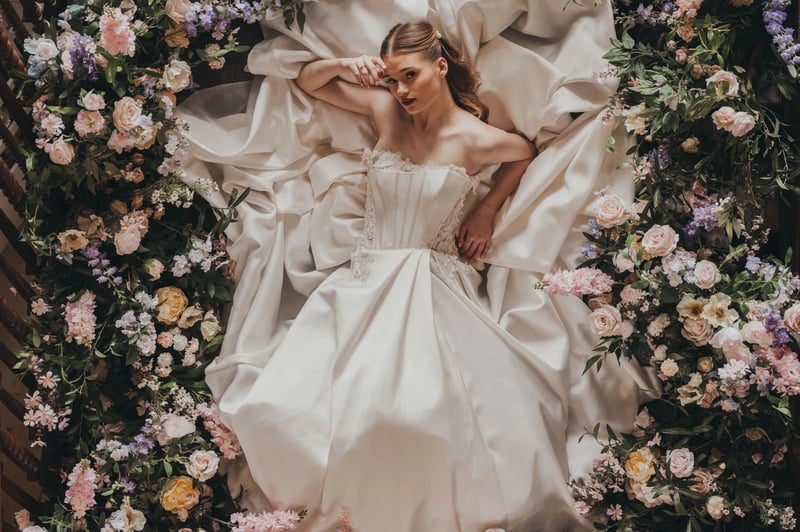
Gen Z’s appetite for experience over objects has created an entirely new supplier landscape.
If your wedding supplier directory still looks the same as it did five years ago, it’s already out of date. Gen Z couples – shaped by their well-documented interest in spirituality, wellness and ‘vibe curation’ – are generating demand for categories that simply didn’t exist at weddings a decade ago.
Aura photographers Google searches for ‘aura portrait’ are up 603% year-on-year, with ‘energy reading’ seeing 347,000 searches per month – up 182% on the previous year.
Already popular at US weddings and appearing more frequently at UK festivals, aura photographers function as both guest entertainment and a personalised keepsake – perfectly aligned with Gen Z’s preference for experiences over objects.
Skin coaches For Gen Z, pre-wedding skincare isn’t a vanity project – it’s a wellness ritual. Google searches for skin coaches have increased by 283% year-on-year to more than 154,000 every month, with wedding skincare searches up 642%.
A skin coach builds a bespoke, months-long programme calibrated to the individual: calming formulas, anti-stress rituals, lightweight textures designed to comfort rather than conceal.
Breathwork facilitators and yoga instructors A guided breathwork session before walking down the aisle. A group yoga practice during the morning getting-ready experience. These are no longer the outliers – they’re becoming a recognisable part of the Gen Z wedding morning.
Claire Bowring is a wedding wellness specialist who offers wellbeing as part of her services now: “There’s definitely a generational shift towards valuing wellbeing more openly.
“Younger couples are often more attuned to their mental health and more open to practices that support how they feel, not just how things look. I’ve seen a real rise in things like hen party yoga and more retreat-style wedding experiences.”
What Gen Z Are Drinking
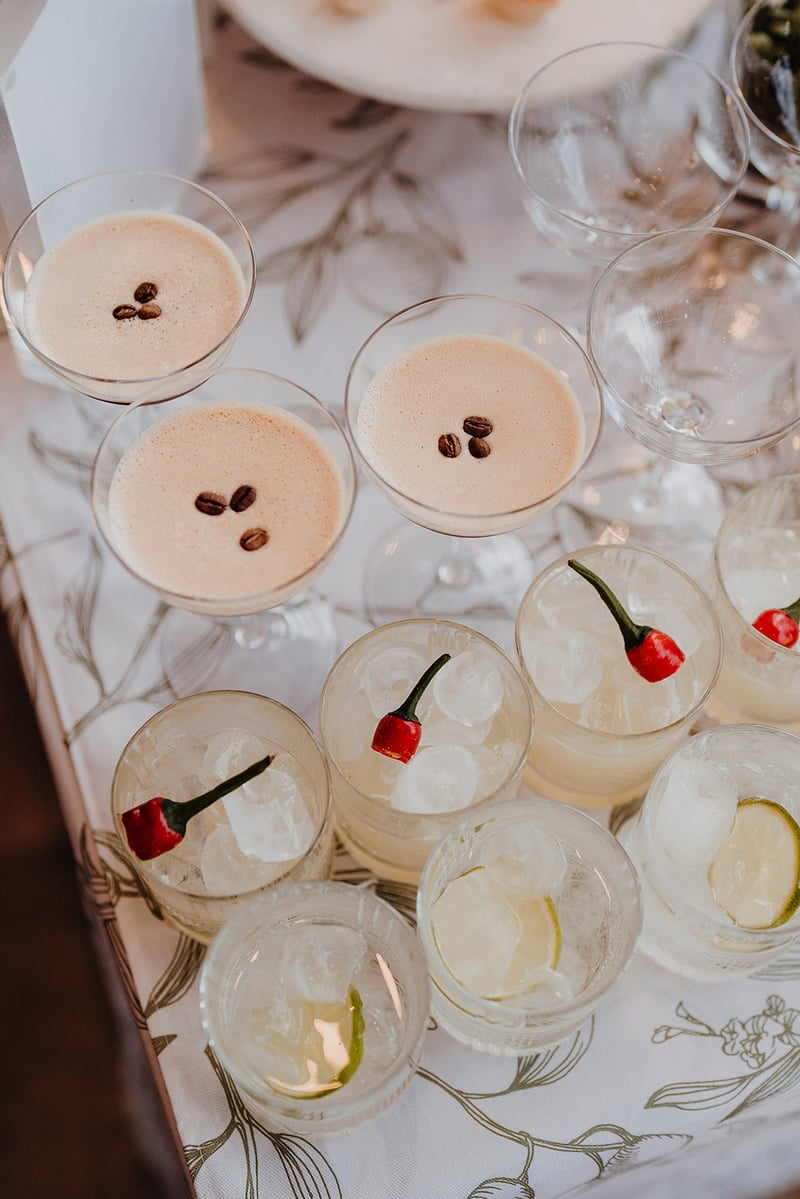
The champagne tower had a good run.
Almost half of Gen Z say they’d prefer to celebrate a special moment with a cocktail over champagne – and the data on what’s replacing it is genuinely surprising.
The Hugo Spritz and the Spicy Margarita are the frontrunners, with online interest in the Hugo Spritz up 74% year-on-year and more than 111,000 monthly searches for Spicy Margaritas – up 20% in the last 90 days alone.
But the real wildcard is matcha.
Google searches for ‘wedding matcha‘ have increased by 747% year-on-year, with more than 33,000 searches every month. For morning receptions, the matcha latte tower – served in elegant glassware, stacked for the ‘reveal’ moment – is a genuine emerging format that ticks multiple Gen Z boxes at once: it’s visual, it’s wellness-coded, and it photographs beautifully.
Consumer interest in matcha overall is up 43%, driven by the endless flavour combinations and recipe content flooding social media. For a generation that treats food and drink as both ritual and content, matcha at a wedding isn’t a quirky choice but rather a deliberate one.
What They’re Wearing: Gen Z Wedding Fashion
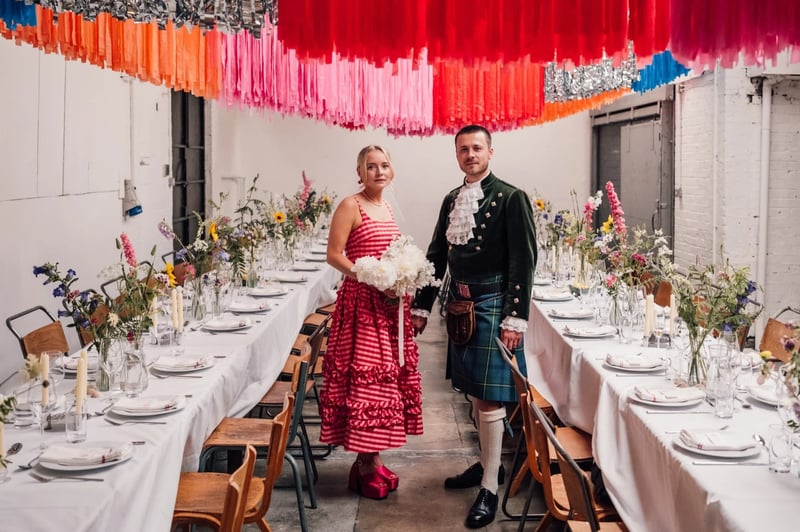
Gen Z bridal fashion has one defining quality: it comes as a pair.
The shoe moment: Mary Janes
For the last few years, the bridal footwear conversation belonged to comfort – Converse, Sambas, Birkenstocks. Gen Z eventually absorbed it so completely into the mainstream that it stopped being interesting.
Every trend signal is now pointing in a new direction: Mary Janes.
Specifically, the sneaker-Mary Jane hybrid – the Puma Speedcat, the Adidas and ASICS crossovers that hit the sporty-feminine sweet spot Gen Z lives for. A white, pearl-detailed Mary Jane sneaker worn with a mini dress or jumpsuit is the most plausible next bridal shoe moment.
The accessory story: veils, gloves, and the return of drama
The veil has become the primary signal that ‘this is a wedding’ – allowing the outfit itself to stay entirely non-bridal. Oversized pearl veils, veils with custom embroidered text, and the theatrical Juliet hood (directly connected to the rise in church weddings) are all growing categories.
Then there are the gloves. Lace wedding glove searches are up 1,319% year-on-year. Pearl or lace gloves carry the nostalgia-irony quality that makes them exactly the kind of thing that goes viral – they look deliberately old-fashioned in a way that reads as fashion-forward rather than dated.
Bridal choker searches are up 91% year-on-year, with ‘bridal choker necklace’ up 344%. Mantilla veils – traditionally conservative – are being restyled with black sunglasses and bold earrings, repositioned from traditional to ironic-fashion.
The “other partner” gap is closed
Almost every bridal fashion feature focuses on the bride. Gen Z is quietly making this framing obsolete.
Matching wedding outfit searches are up 801% year-on-year. Fluid fashion searches are up 788%. Pinterest Predicts 2026 calls out baggy suits (+90%), brooches (+90%) and maximalist accessories (+105%) as key trends – all on the “other partner’s” side of the outfit equation.
For Gen Z, the wedding look isn’t a bridal look with a supporting act but instead, a considered, intentional pair.
How Gen Z Are Planning Weddings
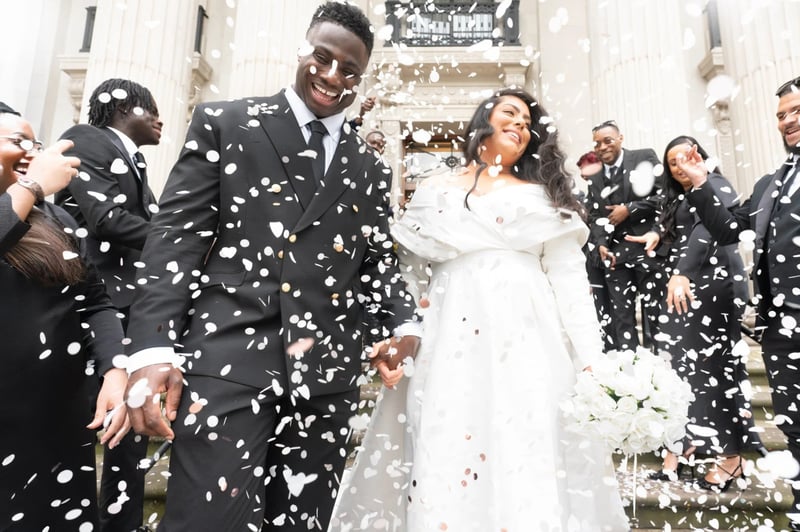
Gen Z weddings are more deliberate, more streamlined, and more intimate than any generation before them.
The midweek wedding Just 44% of Gen Z couples got married on a Saturday in 2025 – with more than a third actively choosing Monday to Thursday dates. The saving: around 12% on the average cost of a wedding. For a generation navigating rising living costs and house deposits, this is pragmatism and intention in equal measure.
The seamless day 84% of Gen Z couples hold their legal ceremony on the same day as their celebrations. 72% marry at the reception venue itself. The fragmented wedding day – ceremony at a church, photos at a park, reception at a hotel – is being replaced by a single, considered experience in one place.
The intentional guest list The ‘day and night’ guest split is fading. Gen Z couples are choosing smaller, more intentional groups – last year, 40% of receptions had fewer than 60 guests in total, compared to 32% in 2024. Evening-only invites dropped from an average of 41 to just 20. Total guest lists are falling below 100 for the first time since before the pandemic.
Less isn’t a budget constraint. For this generation, it’s a values statement.
The Wedding Traditions Gen Z Are Keeping
Not everything is changing.
Almost two thirds of Gen Z couples (63%) receive financial help from family to pay for their wedding – and 49% opt for an official gift list, higher than any other generation. Of those, 80% request cash over household items, experiences or electricals – primarily directed towards honeymoon funds or house deposits.
Gen Z couples are practical about money in a way that older generations sometimes weren’t allowed to be. Asking for cash feels honest and authentic to them.
About this data The Gen Z Wedding Index draws on Bridebook’s UK Wedding Report 2025, the most comprehensive study of its kind, based on the planning and spending habits of 7,000 UK couples. Google Trends data is correct as of 11–16 March 2026 (Global). Supplementary data from Pinterest Predicts 2026 and IWD 2026 Survey (King’s College London).
You might also like:
Related articles